Temporary fencing is a critical component of site management, whether you are running a construction project, organizing a music festival, or securing a disaster relief zone. It serves as the primary barrier against theft, liability, and public safety hazards. However, because it is “temporary,” it is often treated as an afterthought. This lack of attention often leads to avoidable errors that can compromise the security of the site and blow up the budget.
To ensure your perimeter is secure and compliant, it is essential to identify Common Mistakes to Avoid with Master Fence Rental. By understanding the nuances of site security, project managers can save time and money.
1. Underestimating the Total Linear Footage
One of the most frequent errors occurs during the initial ordering phase. Guessing the perimeter length or relying on outdated plot plans often results in coming up short.
The Consequence: If you are short by even 20 feet, your site is not secure. You will have to pay for a second delivery, which includes additional delivery fees and potential delays while waiting for the truck.
The Solution: Always measure the site physically if possible. If you must use a map, ensure it is to scale. It is always better to order slightly more fencing than you think you need to account for overlapping panels and unexpected obstacles.
2. Ignoring Ground Conditions and Terrain
Fencing that looks good on a flat drawing may fail completely on a sloped or uneven reality. Standard fence stands are designed for relatively flat ground.
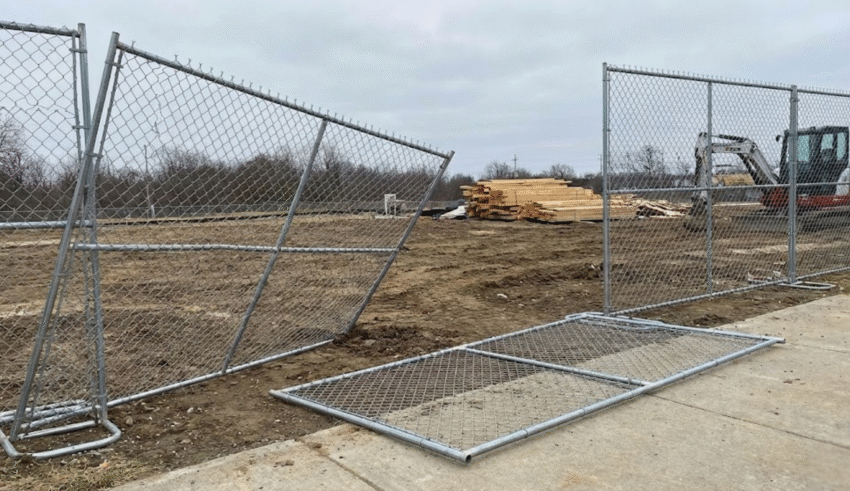
The Consequence: On uneven terrain, fence panels can lean, gap at the bottom (allowing intruders to crawl under), or topple over completely.
The Solution: Assess the ground conditions before ordering. If the ground is soft or muddy, standard stands may sink. If the ground is sloped, you may need specialized bracing or different installation techniques. Communicating these details to your rental provider allows them to send the right equipment.
3. Neglecting Privacy and Wind Load
Adding wind-screens or “scrim” to a fence is excellent for privacy and dust control, but it fundamentally changes the physics of the fence. A chain-link fence allows wind to pass through; a screened fence acts like a sail.
The Consequence: Without proper reinforcement, a screened fence will blow over in moderate winds, potentially damaging equipment, vehicles, or injuring workers.
The Solution: If you need privacy screens, you must use additional bracing or sandbags to counteract the wind load. Failing to account for this is a major safety violation.
4. Overlooking Access Points (Gates)
A fence is only as useful as its gates. Project managers often focus on the perimeter and forget to plan for how people and vehicles will get in and out.
The Consequence: Bottlenecks at the entrance can delay deliveries and frustrate workers. A gate placed in a muddy corner can become unusable after a rainstorm.
The Solution: Strategically plan your gate locations based on traffic flow and ground stability. Ensure the gates are wide enough for the largest vehicles that will enter the site.
5. Failure to Secure Permits
Many municipalities require permits for temporary structures, especially if they block a sidewalk or border a public right-of-way.
The Consequence: A “stop-work” order from the city and hefty fines. You may be forced to take the fence down and reinstall it inches away to comply with setbacks.
The Solution: Always check local zoning laws before installation begins.
The Value of Professional Guidance
The best way to avoid these headaches is to partner with a rental company that acts as a consultant, not just a supplier. Project managers who do not consult experts often fall victim to Common Mistakes to Avoid with Master Fence Rental.
Mistakes like underestimating perimeter needs, skipping permit checks, or ignoring site conditions can create costly delays. Master Fence Rental helps clients avoid these pitfalls with clear planning, professional advice, and durable fence options that fit any terrain or timeline.
By treating the temporary fence as a crucial infrastructure project rather than a commodity, you ensure that your site remains safe, professional, and secure from day one until the final panel is removed.
Frequently Asked Questions (FAQ)
Q: Can I install the rental fence myself to save money?
A: While some companies offer “drop-only” service, it is generally not recommended for large perimeters. Professional installation ensures the fence is straight, stable, and compliant with safety standards, reducing your liability.
Q: How do I secure a temporary fence on concrete or asphalt?
A: When you cannot drive posts into the ground, panel fencing with heavy-duty stands (bases) is used. Sandbags or concrete blocks are often added to these stands to provide the necessary weight and stability without damaging the pavement.
Q: What is the difference between panel fencing and driven-post fencing?
A: Panel fencing stands on top of the ground and is easy to move (ideal for short-term events). Driven-post fencing involves pounding posts into the soil, offering superior stability and security for long-term construction projects.