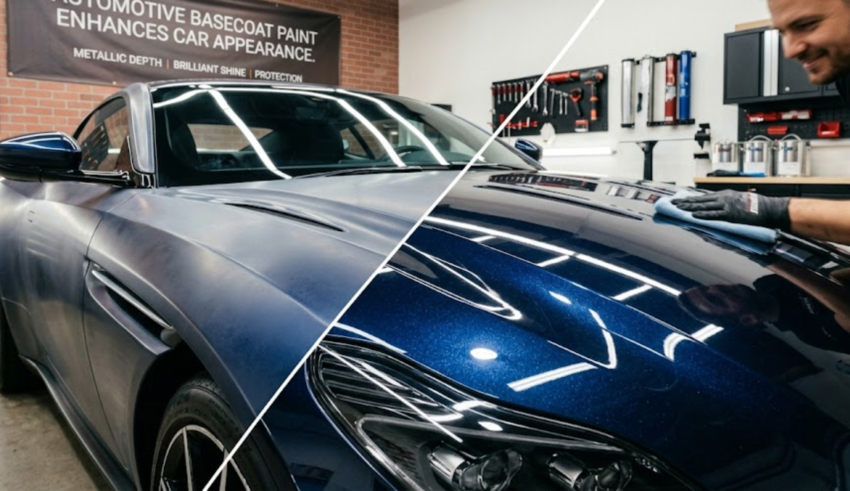
When you look at a stunning vehicle on the showroom floor or watch a custom classic car cruise down the highway, the very first thing that captures your attention is the paint. The exterior finish defines the personality of the vehicle, reflects the owner’s personal style, and highlights the precise architectural lines of the automotive design. Achieving that breathtaking, flawless aesthetic involves much more than simply spraying a single liquid out of a spray gun. At the core of modern vehicle finishing is a highly engineered chemical layer that perfectly sets the stage for a lasting, brilliant shine.
Choosing a high-quality automotive basecoat paint is the most critical step in the entire refinishing process. Basecoat paint provides vibrant and consistent color. By understanding exactly how this specialized foundation works, you can clearly see how it dramatically enhances the overall appearance of any car, truck, or motorcycle.
1. The Foundation of True Color and Depth
In modern automotive refinishing, the two-stage paint system reigns supreme. This advanced system divides the exterior finishing process into two distinct, specialized layers: the color-bearing basecoat and the protective clear coat. Unlike older traditional single-stage paints that combined color and gloss into one highly compromised mixture, a dedicated basecoat focuses entirely on perfect pigment delivery.
Because its sole purpose is to provide color, a basecoat goes down incredibly smoothly and flashes off to a dull, matte finish. This allows professional automotive painters to achieve absolute color saturation. Whether you are aiming for a classic jet black, a fiery bright red, or a soft pastel blue, the basecoat ensures that the resulting hue is incredibly rich and visually dense. It establishes the exact shade that will ultimately define the vehicle’s curb appeal, providing a level of depth that older single-stage paints simply cannot match.
2. Enabling Dynamic Visual Effects
One of the most significant ways automotive basecoat paint enhances a vehicle’s appearance is through its unique ability to carry specialized visual additives. Standard solid colors are undeniably beautiful, but modern automotive design often demands something much more dynamic and eye-catching.
- Metallic Finishes: By suspending microscopic aluminum flakes within the basecoat formula, paint manufacturers create a finish that intensely sparkles under direct sunlight. These tiny metal flakes reflect light at varying angles, giving the vehicle a sharp, high-tech appearance and emphasizing the sleek curves and body lines of the sheet metal.
- Pearlescent Effects: Taking visual customization a step further, pearl basecoats utilize natural mica particles or highly advanced synthetic prisms. Instead of simply reflecting light like aluminum flakes, these particles actually refract it. This creates a stunning color-shifting effect where the car might look deep blue in the shade but radiate a vibrant purple or gold highlight when the bright sun hits it.
Without the unique chemical suspension properties of a premium basecoat, these mesmerizing, multi-dimensional effects would be entirely impossible to achieve evenly across large vehicle panels.
3. Achieving Flawless Uniformity and Opacity
Nothing ruins the look of a custom paint job faster than a blotchy, uneven, or heavily mottled finish. When applying automotive paint, achieving a perfectly uniform layout is an absolute necessity. High-performance basecoats are formulated with advanced thinners, reducers, and flow agents that allow the paint to atomize perfectly as it leaves the nozzle of the spray gun.
This fine atomization means the paint lays down in microscopic, tightly overlapping droplets. It effectively covers the underlying primer and sealer layers, providing total visual opacity without creating thick, heavy runs in the paint surface. This exceptionally smooth application ensures there are no dark patches, tiger stripes, or transparent spots on the vehicle. A consistent basecoat layout is the ultimate key to a professional, factory-quality finish that looks perfect from every possible angle.
4. Setting the Stage for the Ultimate Gloss
It is very important to note that a basecoat does not shine on its own. Shortly after it is applied, it dries flat and completely lacks structural protection against the harsh elements. However, this dull, matte surface is exactly what makes the final appearance so incredibly striking.
The basecoat is chemically engineered to bond seamlessly with the subsequent clear coat layer. The clear coat provides the actual ultraviolet protection, robust chemical resistance, and the deep, glossy wet look that car enthusiasts highly covet. Because the basecoat goes down so smoothly, it creates a perfectly flat canvas. When the thick, transparent clear coat is applied directly over it, the clear layer acts almost like a magnifying glass. The light travels through the clear layer, hits the vibrant basecoat pigment or metallic flakes, and heavily bounces back to the viewer’s eye. This synergistic relationship between the basecoat and the clear coat is what gives modern vehicle finishes their gorgeous, mirror-like reflection.
5. Perfect Color Matching for Seamless Repairs
Enhancing a car’s appearance is not exclusively about complete, custom resprays; it is very often about restoring a daily-driven vehicle to its original glory after a minor collision. Automotive basecoat paint systems are meticulously designed with precise color-matching technology in mind.
When a fender, bumper, or door needs to be replaced, technicians use an advanced spectrophotometer camera to read the exact color of the car. They then use a specific paint code to mix the exact basecoat formula originally sprayed by the factory. Advanced mixing banks allow painters to slightly adjust the basecoat to account for years of subtle sun fading on the rest of the car. Because the basecoat can be blended softly and invisibly into the adjacent panels before the entire side of the car is clear-coated, the human eye cannot detect where the repair took place. This seamless blending capability is crucial for maintaining the pristine, unified appearance of any high-end luxury or late-model vehicle.
Conclusion
Transforming a dull, aging automotive exterior into a show-stopping masterpiece relies entirely on the quality and professional application of the paint. The visual impact of any vehicle is inextricably linked to the vibrancy, depth, and consistency of its color. By utilizing a premium automotive basecoat, professional auto body technicians and dedicated garage hobbyists alike can achieve flawlessly uniform coverage, seamlessly integrate breathtaking metallic or pearlescent visual effects, and set the perfect foundation for a mirror-like clear coat finish. Whether you are executing an invisible collision repair to return a family car to the road or building a highly customized hot rod from the ground up, investing in a high-quality basecoat is the ultimate secret to unlocking a truly breathtaking automotive appearance.
Frequently Asked Questions (FAQ)
Q: Can I leave a basecoat as the final finish if I want a matte look for my car?
A: No, you should never leave a standard basecoat completely unprotected. Basecoats are highly porous, lack UV inhibitors, and offer zero resistance to chemicals or weather. If you want a flat appearance, you must apply a specialized matte or satin clear coat over the basecoat to fully protect the color while maintaining the non-reflective aesthetic.
Q: How many coats of basecoat are typically required for a professional paint job?
A: The number of coats heavily depends on the specific color being sprayed and the shade of the underlying primer. Generally, painters apply two to three medium wet coats to achieve full color coverage and complete visual opacity.
Q: What is the difference between a solid and a metallic basecoat?
A: A solid basecoat consists solely of flat color pigments, resulting in a clean, uniform shade without any sparkle. A metallic basecoat contains finely ground aluminum flakes suspended within the color pigment, which effectively reflect light and give the paint a sparkling, highly dimensional appearance.